Designing Field Tools for Philly Truce's Peace Patrol
INTRO
Philly Truce is a Philadelphia nonprofit working to reduce gun violence through community-led patrols. Peace Patrol Officers — many of them justice-impacted — walk routes in the neighborhoods hit hardest.
They document incidents and walk those routes in the field — older phones, bad signal, no extra taps.
Reports were labeled “Report #1839.” Shifts lived in group texts. Finding a report meant opening them one at a time.
I was one of six designers across two phases. I worked on IRMP assignment and editing, and I owned the All Routes filter through the Phase 5 file.
Role
UX Designer, one of six
IRMP + Routes
Status
Phase 5 handoff
Hi-fi prototype
Type
Nonprofit
Mobile
Civic field tool
Tools
Figma
FigJam
Notion
Problems
Reports labeled only by number.
Shifts ran on group texts.
Field use: old phones, bad signal, no spare attention.
Solutions
All / My Routes, with slots on the card.
A separate filter for distance, time, and neighborhood.
Reports titled by street and incident, not a number.
Results
3/3 testers found the right report and assigned it.
All Routes filter is shipping to the live app.
IRMP ready for dev.
Final screens


The Incident Report Management Platform
Officers could not record an incident reliably.
Peace patrol officers were writing incidents on a paper form. The form asked for a school, a student, and a race before it asked what happened. The app that replaced it still did not say the street.

Fig 1. Example of how incident reports were made on paper before going digital.
Overhauling Editing


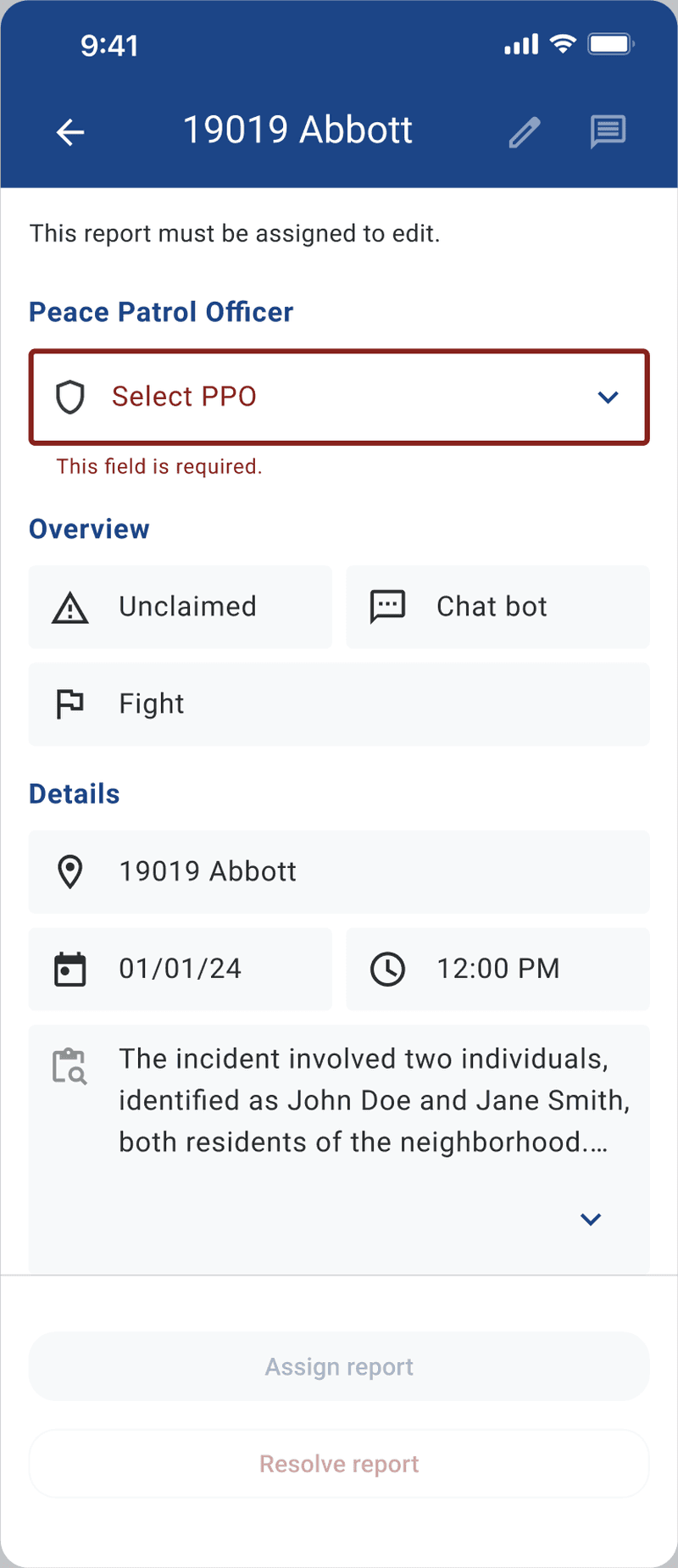
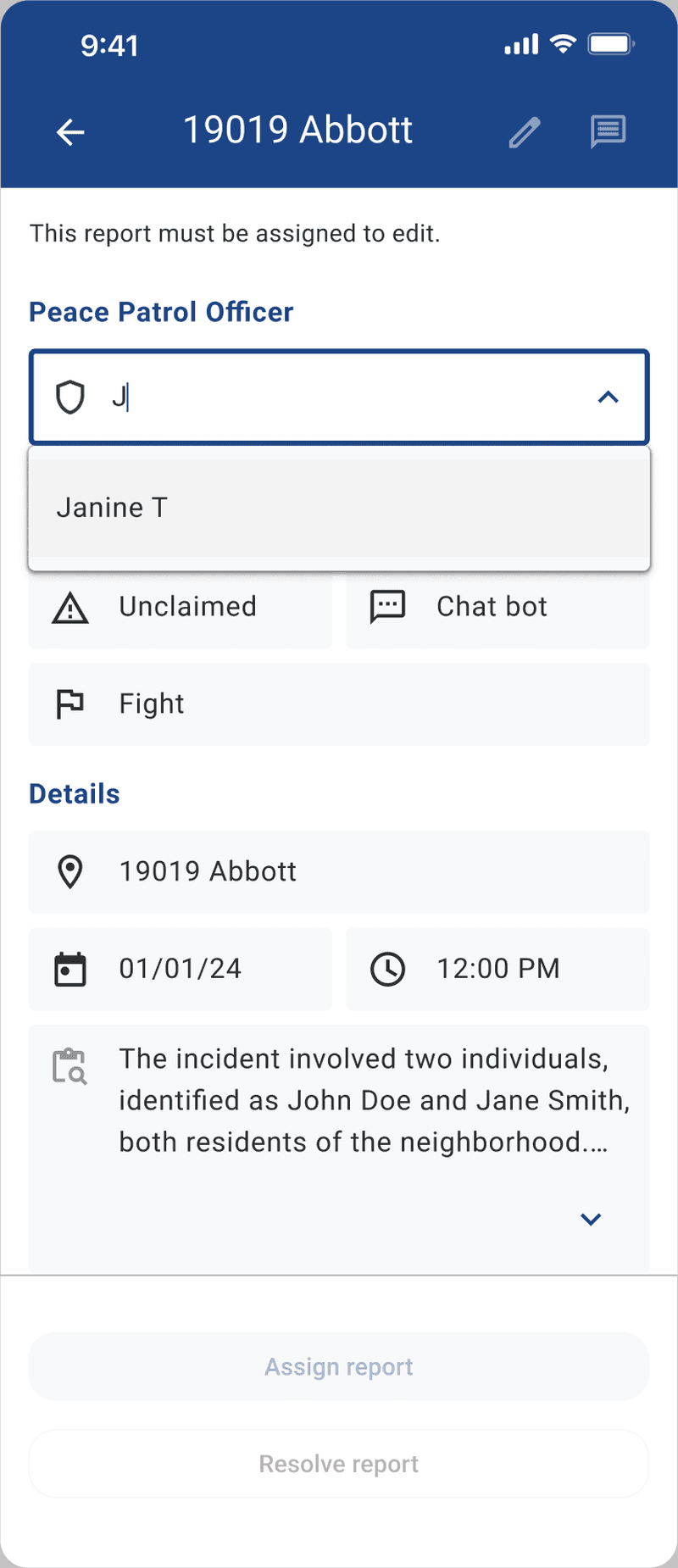


3
The routes management system
The All Routes screen shows location, date, and time without opening a route, and only one to two weeks out. Tapping in shows the map, time, instructions, and slots. Claim route stays off until the officer picks home base or on route.


Claimed shifts live in one list.
My Routes splits them into upcoming and past. Unclaiming asks once and names the exact shift. The one-hour limit sits on the card, not in a help page, so an open slot can be filled.


The list got too long to scan.
Filtering was not in scope. I added it so an officer could narrow by distance, time, or neighborhood. Show routes stays off until one filter is set, then shows a live count. It is a dedicated screen, not the IRMP modal, and it shipped in the Phase 5 file.


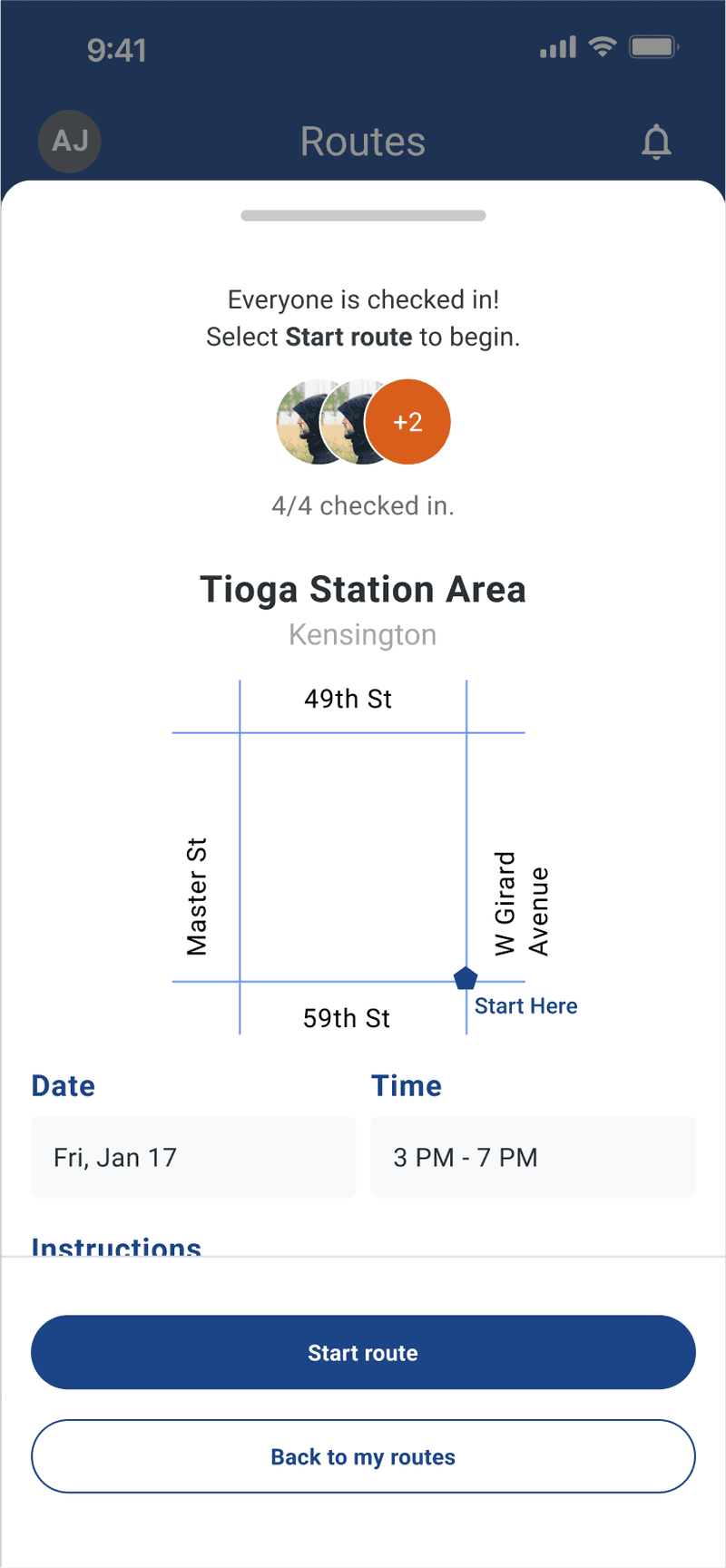
The route does not start until everyone is there.
Every assigned officer has to check in. If someone is missing, the route does not start. On patrol, the screen shows who is on duty, their role, and a live countdown.



Say it, don't hunt for it
Natural language replaces category browsing. People describe what they need instead of guessing where it lives in the app.
One question, not a form
When input is unclear, I ask a single focused question instead of guessing or showing a long list of options.
Something instead of nothing
If nothing matches well, the closest option still comes back. No one lands on an empty screen.
A safety branch, built in
If someone's words point to real distress, the flow sets meditation aside and hands them to actual support.
Outcomes & Reflection
Where This Stands
Phase 5 closed with the IRMP design ready for development and the Routes system finalized through high-fidelity screens. The IRMP updates and my Routes filter were built to be tested in the next phase; the Routes flow itself hadn't gone through usability testing when the phase ended, so its actual field performance is still an open question. Sign-up and account settings stayed out of scope on purpose, kept from an earlier phase, so the team could focus fully on the two tools officers use most.
What I'd Do Next
Test the All Routes filter with real Peace Patrol Officers, and expect some of the same labeling issues the IRMP filter ran into
Revisit onboarding. Research surfaced real digital-literacy gaps and high officer turnover, and the app still has no first-use guidance for someone opening it for the first time
Look at non-conflict incident types. Most patrol activity isn't conflict at all, and the current categories default too often to "Other"
Reflection
This was the first project where the users weren't hypothetical. Peace Patrol Officers do real work in real neighborhoods, and the margin for a confusing screen is smaller than it looks from a desk.
It gave me a real appreciation for nonprofit work, different stakes, different motivation, hours that felt worth it. I lean introverted, and working closely with a large, changing team across two phases is part of why I'm still in touch with people from both, and why I'd work with them again.